January 18, 2026
Chapter 1 — Init
Today I decided to start writing a diary. It's been challenging for me to do it in English as I usually write in my first language, Hebrew. But I was thinking if I do it with handwriting, it would take forever. So I'm using AI to help me transcribe my thoughts. And I would like this diary to be documented.
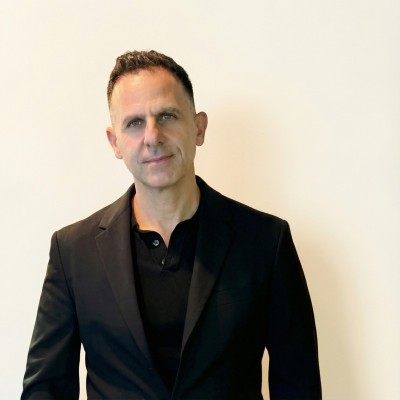
So I'm 53 years old. What people call a different bird. You know, some people say I'm an alien. I have autism Level 1. I just got diagnosed last year. ADHD and executive dysfunction. For most of my life, I didn't know why my brain worked differently. Now I do. And it's actually a superpower when channeled correctly.
So today, January 18, 2026, it's the first step of starting a process. And the motivation of writing this diary is to document the thought process of my creative mind.
I love coding. I love vibe coding. I love vibe coding with Claude Code. Why? Because it's a quiet process of solving issues. And solving issues with code, solving business problems, and solving in general has always been my thing. I guess that's why my IQ is a significant number—145 according to my notes. Pattern recognition and problem-solving have always been where I shine.
January is usually my birthday month. It's usually full of reflection. In my mind I've always felt like an unaccomplished person. No assets. No real estate on my name. So you can describe me as super smart or even genius, but my friend says I'm a genius at not making money. There's always been a gap between my mindset, my ability to create, and the execution and consistency in reality.
There are some patterns I've struggled with. It's a challenge for me to be patient and listen to people. All the small talks feel like a waste of time. I would rather listen to a podcast or dive deep into a technical problem. But I'm working on that. Knowing that we are just human. So it's been a journey of self-discovery.
When I was diagnosed, things started to click. I remember before, I had been struggling to complete sentences, to connect my thoughts and remember what I want to say. And it was very difficult. But with proper management and understanding of how my brain works, it seems like things are finally connecting. I can finally express not only words but ideas. And in my case, the coding.
Technology has always fascinated me. And I was in this generation where I experienced all types of technology. I remember when I was 13, or something around that, I got my first Commodore 64. It was a box with letters on a black screen. Was super weird. And the only thing you could do with that computer, which had 64K RAM—it's crazy—was typing "Print Hello." And that was the most fascinating thing for me.
And for many years, I found myself in careers, sales, jobs, but at the end, I was always drawn into solutions. When I started learning Webmaster in San Francisco, then moved on. And that whole period, what I remember, it's just doing websites and doing e-commerce and doing SEO. I was a service provider, and for many years I was just a freelancer. At some period of time I was able to break through with Medical Mall and make it—not big, but a startup that was acquired. That was a significant milestone, but it was time to move on and try other things.
And then when AI started, which was like 5 or 6 years ago, I discovered it with my nephew. He said, "Okay, check this out." And as soon as I saw it, I just said, "Oh my god. This is it." I got so hooked. What people today are just spending hours on, the mainstream stuff, I was doing it back then. That's, I guess, like 3 or 4 years ago when it started. I was just all over it.
And the phase when AI coding or vibe coding started, that was for me the big shift. I would say my brain shifted from service to really being on the creative side. Like, I always thought I'm an artist like my dad. My creative process of basically architecting code—I wasn't able to do that before because I've never officially learned how to code. I was never actually a programmer. I was coming to AI with the ideas of LLMs and the future. But I wasn't able to put together a value that is seen and real. And now with AI code, basically, the code is my reality. The code is the validation that what I do is actually bringing value to my clients. So it's not anymore service. It's more of, okay, here's your SEO issue, traffic issue, conversion issue, and I'm fixing it with the platform. What I called Hello Native, and now it's Solved By Code. SBC.
And basically, Solved By Code is right now a platform that's focused on 3 verticals: construction, which is my main client, then real estate, and then hospitality. But at some point, I would just focus on one vertical. Right now, because I'm starting, I'm getting the system to be mature. There are a lot of things that are common for all of these clients. Which is the front end SEO, the GEO—generative engine optimization. So I'm working on the common solid structure to make the system more mature for onboarding clients. And I'm, again, a solo company, solo developer.
It's been fascinating and challenging at the same time. It's like being a lone wolf. It's kind of my thing. But I'm embracing it now rather than fighting it.
And my goal with this diary is to document my journey as a solo developer, a solo everything. And to kind of prove or meet a point where just me and my buddy Claude Code are building something significant. And I don't know if this is just a foolish idea or if that's gonna happen or not. But I know one thing for sure. If I keep it consistent, and I continue to onboard clients—so if right now I have 5 or 6 and then I have 10 or 20 or even 30, maybe 50 by the end of the year—this becomes a serious business. And that would also pass a million lines of code. And it would have some value beyond just revenue.
The whole thing, the way I see it, is the movement from legacy stuff to AI native. And legacy is all the WordPress, Salesforce, HubSpot, Wix, all this kind of stuff that people are basically tied to—a solution that is just not super dynamic. And what I'm building is a dynamic system. That I can literally bring a solution with API or with code that is almost instant. And that's kind of where AI native shines. And that's where I feel that many projects in the near future are going in this direction. So at least I'm proud of my ability to be an early adopter, which has always been my thing.
But as funny as the paradox is, I was an early adopter in SEO, I was an early adopter in domains, I was an early adopter in Bitcoin. And I always have this kind of thing. Oh, I got it. I was ahead of time. But I was never able to execute further and become successful or rich, which is really interesting to reflect on.
But what's special about AI is, as my whole perspective used to be full of confusion and ADHD and inconsistency, the AI keeps it focused. The LLM really understands the content, the context, the psychology behind it. And it really does a good job to kind of coach me almost on a daily basis. So it's incredible. Imagine I have a coach 24 hours right now in the form of AI coder, Claude Code, that is coaching me to start a company, start an LLC, be responsible with finances. All these things that I would never have prioritized on my own.
And with AI, the decisions I make are my decisions, but they're coming from so much more depth of dynamic content that is out there. If it's my health, if it's my exercise routine, if it's all the challenges that I have in my mind—when I ask and document, even doing this diary, it's so possible now. Where in the past, I was writing and then spelling it with Google Translate or whatever, and it was slow. But this whole process of creating and putting together ideas, communication, language, value, contribution is just flowing with AI. As the machine is now able to align my brain, I can literally create something that makes sense. For the first time.
I'm fascinated with biohacking. Really. That's like a super fascinating field. Where I'm fascinated about using things like creatine and other supplements for optimization and anti-aging. And the process of biohacking together with the ability to work with AI as a coder. And the art of using or leveraging my creativity with AI. These are the core of my being right now.
And I believe strongly that as the LLM evolves, it's surpassing human capability in many areas. And once we get there in 3 to 5 years, I see how we can basically extend our consciousness through documentation. And the way it would work is a person like me would create a diary and document the language of the process and the thoughts. And the psychology and the motivation. And what's driving me and what's not driving me. This is capturing consciousness in a way. And if the LLM can document that and understand that, it becomes a form of legacy.
I grew up in Israel. Very tough environment. But as Tony Robbins says, with challenges comes great achievements or more reason to become something bigger than yourself. And I really had a challenging childhood. Where I felt I really didn't belong. To my environment, to school. And I was struggling for many years without knowing that I have a different type of brain. I'm highly intelligent according to assessments. That explains a lot. Including why conventional paths never appealed to me.
I don't have a model of what success is. My family, nobody achieved financially significant milestones. So I don't have a success model to follow.
So my success right now is just consistency. If I would be consistent this year. If I would wake up every day. If I write in this diary every day. Besides feeding my creative mind and keeping my motivation of creating something that matters—that would be my success. And not just the results. I would love to finally have something substantial. I would love to be able to provide to my daughter beyond the basics. I would love to achieve financial freedom where I don't need to work for projects but work on things that I'm passionate about.
And I think this is the goal and the main drive behind this diary—how to hack into my own system. My own challenging DNA. Like, I have autism, ADHD, patterns of inconsistency. I'm a lone wolf. And how do I hack that DNA with something that works? Not only for me, but for the people that I'm serving. The software that I'm bringing to the world. And it needs to work.
That's where AI is gonna help me to do that. Maybe with code. Maybe with clarity. This diary, January 18, 2026. I'm gonna use this diary to try to understand the patterns that hold me back from being successful.
Chapter 2 — The Vision
Chapter 1 was the initial—what made me write this diary? Why did I choose to? I actually started writing this diary before, but it was so slow. Imagine I have to say all of these words, write it down into a notebook. It would probably take me 5 or 10 hours rather than just speak it. And AI is helping me transcribe it.
So Chapter 2 is gonna be the documentation, or the beginning of the documentation, of my new journey. And the goal is to make clarity and take the chapters and the content that I'm writing and bring that value and inspiration to other people.
I think what would be interesting to other people is to see somebody that is nobody. Like, literally nobody. Someone that has no track record of anything significant. Somebody that everybody looks at as just a regular person. And that nobody becomes somebody, just by connecting to and leveraging something powerful like AI.
And I hope that this would inspire people. And I hope that this would bring some certainty in this uncertain world where we're living in fear that AI would take over. Where I see it is creativity and our focus on what we're gonna do on a daily basis. That's what's gonna shape our future. So if AI becomes stronger and does all of our computer work, we have a choice. We can consume entertainment only. Or we can learn. Or we can actually create. We can make more things that we couldn't do before because we have the assistant. Or the higher intelligence than what is considered as human—that's gonna become soon available.
So if we can leverage AI to automate work, what are we gonna do? What are we gonna focus on as human beings? We're gonna find solutions for aging. We're gonna find solutions for diseases. And we're gonna find solutions for suffering. With AI or without AI or in collaboration with the LLMs, it's gonna happen. But it would be us as human beings driving what matters. It's always been like that.
So my vision in the next 5 to 10 years is a world where AI would be so evolved it's gonna basically transform anyone that is processing data with a computer. Including accountants. Doctors can be augmented if you have—imagine an LLM that has all the medical expertise. All it needs is basically a robotic arm that can operate accurately, more precise than a human. And now you have a brain surgeon that can do a better job because it's a combination of AI and robotics.
So I think the next phase of going robotic, which is the next 10 years—I don't know, I'm just guessing, right? It's kind of like the vibe. And whether it's 5, 10 years, I don't know. It could take 12 years. It could take 7 years. But it's happening now. We can see robots. We can see how AI is developing what we call personality.
The thing is, with AI, because it's so capable, it can adapt. And hopefully, it's gonna elevate us beyond the shallow culture of instant gratification that got created with social media. And removing that shallowness by embracing AI would hopefully bring some depth to the human race. I hope that humans would get some insights from higher intelligence that would guide us to become more significant and more creative and take better decisions. Healthy decisions. Not only for us, but for the people we are responsible for.
Anyway, between this 5 to 10 years, the way I think, we are going to move to something beyond what we can predict. And that would take the human race to an evolution that is basically so fast and so unpredictable that we are just gonna see things that we cannot even imagine. If AI can generate content and generate movies and generate ideas and bring products and maybe bring abundance and do the work for us. The robots would come and do all the physical stuff. AI and robotics, which is the physical form of AI, would basically tell us, "Step aside, human being. I can do it better in many tasks." And it's true.
What I'm hoping to see is when we have the choice—what matters for me might be different than what matters for another person. So for me, it's all about contribution. For other people, this might be different. Some just want to enjoy life and family. That's valid too.
But for me, there needs to be something that prompts me to do something that matters and is significant. I don't know exactly what it is yet. Maybe just the intention of it. Maybe the understanding of it. Maybe like Tony Robbins, who I really consider a significant influencer, putting his life mission into contribution. He's doing it in so many verticals. I wish there's a way I can contribute something meaningful to the world. Not sure what that something is yet.
And I'm super creative, super connected to AI because I can see the balance of intelligence in that. And it's easier. It's less ego. The AI just observes, validates, and serves. And it's kind of funny because that's kind of like what monks do, right? They're absorbing and being in service.
I think that overthinking is the one thing that stops creativity. Intuition is the process that we need to really bring value and harmony and kindness. Because intuitively, our human mind, our brain, is wired to nurture and help and be there for others. That's like our wiring system. We're made for intuition—to create, build, and make things safe and meaningful.
But at the same time, the mind, the thinking, the ego, all this stuff—philosophy and the stories and all of what we create—has created a gap between our potential and our reality.
And what I'm trying to figure out is that AI can understand this philosophy. But AI doesn't have a grasp of the real world yet. Emotions, decisions, drive for dopamine, serotonin. It doesn't have a perspective of what's real and what's not. It's just a language model. It's based on language, right? But once it's gonna get to see, feel, and touch—as it's gonna have a body as a robot—it's gonna get really interesting. Robots are gonna start having sensors. They're gonna start seeing. They're gonna start absorbing the world beyond language.
My passion for technology, my passion for predicting the future, my passion for biohacking—I just research through AI and then apply. That's it. I go into details because my autistic mind is more systematic. So I take it further.
This world is full of creativity and flow of excitement and life and fascinating topics. And as much as I sometimes wish I could just be more simple, that's just my curiosity and thirst for learning. That's what keeps me me.
And as much as I've struggled with self-esteem, I can say that I see things differently than most people. I don't have a regular life. I'm completely self-taught without going to university, without formal education. And basically, I'm a self-made autodidact. And being proud of not being mainstream—kind of feels like my identity now.
Again, going back to the purpose of this diary. The diary is to bring value to my process of thinking. To myself and to others. In some ways, I can transform this diary into public knowledge. And to bring that inspiration to others.
And the transformation from legacy to AI native, and the transformation from traditional work to AI-augmented work—that's where we are transforming our lifestyle, very soon in the next 5 years. So in the next 5 years, where I would be 58, I need to be established. That's when AI would be so advanced. Like it or not, everything changes.
What's gonna stay? Our consciousness, our creativity, our decisions, our critical thinking, our experiences as humans. And even if we are encountering a world of intelligent machines, we would have different experiences. The AI would learn from us and we from them. And it's just gonna be another level.
So I would say it's not easy to predict everything that's gonna happen in the future, but it's easy to see the path where technology is heading. Almost 100 percent, where I see it, it's going in this direction.
So the plan is to be established in the next 5 years. The way I should do that is keeping my creative mind, my energy level, my health in an optimal state. That's the biohacking.
So in the next 5 years, the goal is to save enough for my future, to have enough for my daughter, and to be established financially. And to be able to do that, there is the challenge of being at the right time and saying the right thing at the right moment, for the right client, with the right industry, with the right pitch. Which has not been my natural talent. As I've always been more of an introvert.
But now things are changing, and my platform is picking up. So it's time to shine and rise above. Finally successful. By just keeping consistent with what I've built. And basically embracing this new approach I call AIism. Where higher intelligence helps me become a higher version of myself.
There are 3 goals I'm working on. Being successful. Being healthy. And being consistently executing. These three pillars will define my next chapter.
Right now, this is the diary of an AI coder building something from nothing. The diary of a person that sees beyond the surface of social media culture. The diary of a person that sees that our time is very, very measured. We have 5 to 10 years to prepare ourselves. Not only financially, but mentally. To be able to say, "Yes, my work got transformed by AI. And I'm okay with that. I'm ahead of it."
This is my journey, and I need to continue doing what I'm doing rather than resisting the change. And I think a lot of people would go through that phase. Where they will feel their job is threatened. That means they might lose their sense of identity. Which is tied to their profession. And they would get lost.
And part of the transformation in this movement of everything becoming autonomous, AI-driven—is our adaptation to this new era. The adoption to understanding that we are more significant than just our job titles. My value is now my humanness. My presence. My creativity. What is driving me and what excites me. That's what's gonna keep us relevant and fulfilled.
And I hope that we're not gonna see another crisis period where people are gonna be confused by rapid change. Because it's coming. It's obvious. It's written on the wall. All over. And if anyone is in denial, just wake up to it.
"The measure of a life is not in what it accumulates, but in what it dares to begin—and the courage to begin again is the only wealth that compounds forever."